September 22, 2026
Laundry Room Cabinets Around Stacked Washer and Dryer Units
Discover how to design laundry room cabinets around stacked washer and dryer units. Explore practical ideas for maximizing vertical space, improving storage, keeping essentials organized, and creating a functional laundry room layout.
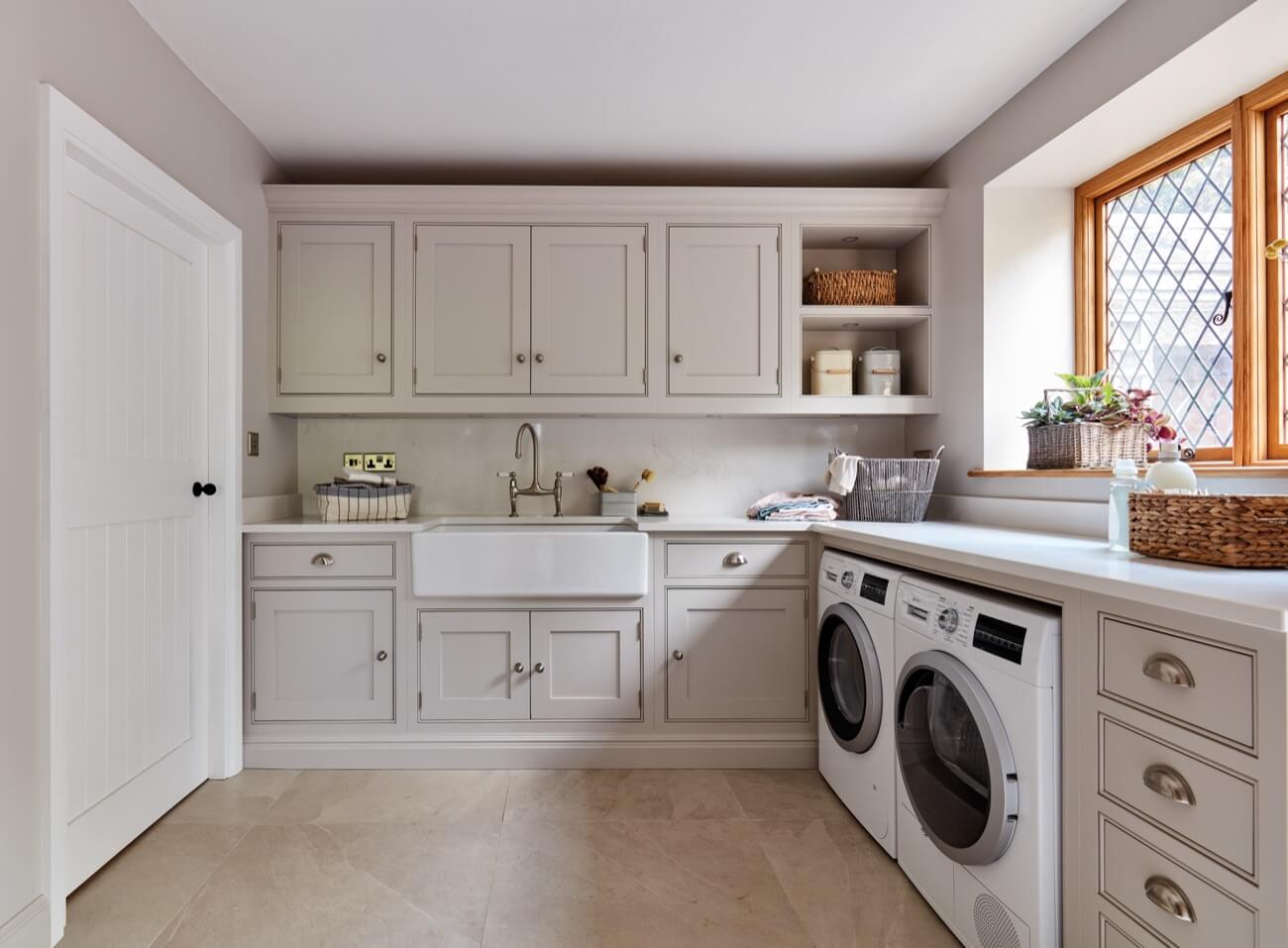
Laundry room cabinets around stacked washer and dryer units can make much better use of available space, especially in compact laundry rooms, closets, mudrooms, and multifunctional utility areas. By placing the dryer above the washer, homeowners can free up valuable width that would otherwise be occupied by two side-by-side appliances and use that space for cabinetry, storage, or a folding area.
However, stacking the appliances does not automatically make the room more functional. Without thoughtful storage, detergent bottles, cleaning supplies, baskets, towels, and laundry accessories often end up on the floor, on top of nearby furniture, or crowded onto a single shelf. The room may save space physically while still feeling disorganized.
Well-designed laundry room cabinets around stacked washer and dryer units solve this problem by using the vertical and surrounding wall space more effectively. Tall cabinets, side storage, shelves, drawers, and custom built-ins can transform a basic appliance area into an organized laundry station that feels intentional and visually connected to the rest of the home.
The key is designing the cabinetry around the exact appliance dimensions, required clearances, ventilation, utility connections, door movement, and future service access.
Why Build Cabinets Around Stacked Laundry Units?
The biggest advantage of stacking a washer and dryer is the floor space it saves. A traditional side-by-side arrangement requires enough width for two full-size appliances, while a stacked configuration concentrates both machines into a much narrower footprint.
That extra width can then be used for storage. Depending on the room, homeowners may be able to add a tall cabinet beside the machines, create shelves for frequently used supplies, include a countertop for folding, or combine open and closed storage.
Laundry room cabinets also improve the appearance of the laundry area, especially when they are designed to visually integrate stacked appliances into the surrounding space. A freestanding washer and dryer can feel purely functional, particularly when hoses, vents, electrical connections, and cleaning supplies remain visible. Surrounding the appliances with cabinetry creates a more finished built-in look and helps the room feel more intentional.
A well-planned configuration can provide storage for:
- Laundry detergent and fabric care products
- Cleaning supplies
- Towels and linens
- Laundry baskets
- Ironing equipment
- Paper products
- Household supplies
- Pet-care items
The exact combination should depend on where the laundry room is located and what the household actually needs to store there.
Start With the Washer and Dryer Dimensions
Cabinet design should begin with the appliances rather than the cabinetry. Stacked washer and dryer units vary considerably in width, depth, height, ventilation requirements, and door configuration, so measurements should always come from the specifications for the exact models being installed.
According to ENERGY STAR, stackable washers are available in different widths and capacities, including compact models designed for smaller spaces. Explore ENERGY STAR clothes washer guidance
Manufacturers also specify minimum installation clearances around their appliances. Whirlpool notes that stacked configurations need enough space for hoses, ventilation, airflow, appliance stability, and fully opening doors. See Whirlpool’s washer and dryer sizing guidance
Before cabinetry is finalized, designers should know:
- Exact appliance width and depth
- Total stacked height
- Door dimensions and swing
- Required side and rear clearances
- Vent location
- Water and electrical connections
- Manufacturer servicing requirements
Using approximate dimensions can create problems later. Even a small difference can affect whether doors open correctly, whether ventilation can be connected, or whether a technician can access the machines for maintenance.
Leave Enough Space Around the Appliances
A built-in appearance does not mean the washer and dryer should be tightly enclosed on every side. Laundry appliances require proper clearances for airflow, vibration, installation, and maintenance, and these requirements vary by model.
Front-loading washers can produce significant movement during high-speed spin cycles. If cabinetry is installed too close, vibration may transfer into surrounding cabinets or create unnecessary noise. Dryer ventilation and heat management also need to be considered carefully.
Whirlpool recommends checking the installation instructions for each appliance and leaving additional space where needed for servicing, hoses, vents, and door movement. Read Whirlpool’s stacked washer and dryer installation guide
Plan for Future Service Access
One of the most important details in built-in laundry cabinetry is making sure the machines can still be removed when needed.
Water valves, drain connections, outlets, and dryer ducts may eventually need maintenance or replacement. If cabinets are built too tightly around the appliance tower, a relatively simple repair can become much more complicated.
Removable fillers, accessible utility panels, properly sized openings, and enough space in front of the appliances can preserve the built-in appearance while still making future servicing practical.
Add a Tall Cabinet Beside the Stack
One of the most useful laundry room cabinets layouts combines a stacked washer and dryer with a full-height cabinet beside the appliance tower. This configuration makes efficient use of the room’s height while preserving a compact footprint.
A tall cabinet can accommodate several types of storage depending on its width and depth. Adjustable shelves work well for towels, detergent, and household supplies, while vertical compartments can hold taller items such as ironing boards, mops, brooms, or folding drying racks.
Tall laundry cabinets can be particularly useful for storing:
- Detergents and stain removers
- Extra towels and linens
- Cleaning sprays and refills
- Ironing accessories
- Broom and mop storage
- Laundry baskets
- Bulk household products
Upper shelves can be reserved for less frequently used products, while everyday supplies remain within comfortable reach.
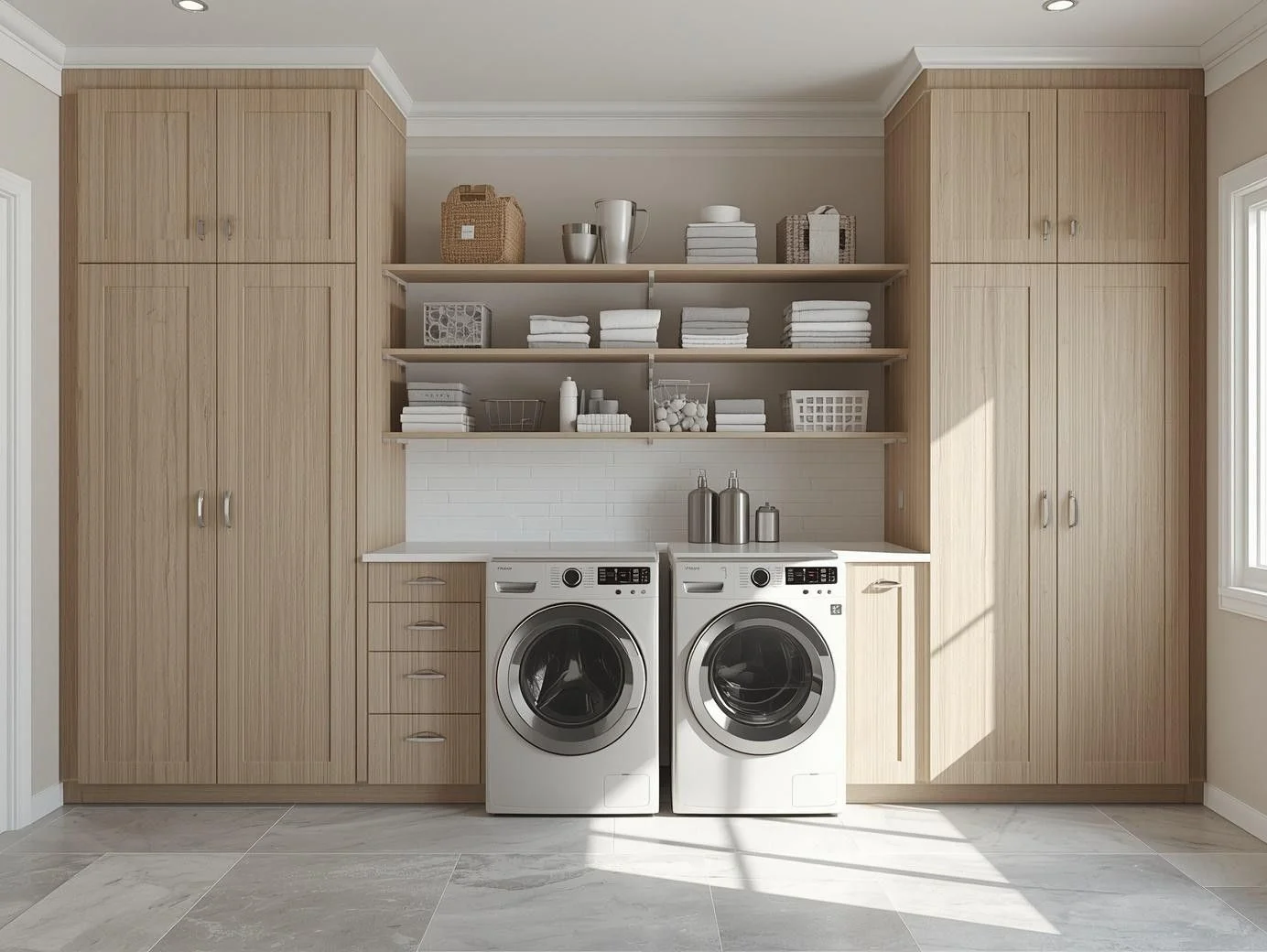
Combine Closed Cabinets With Open Shelving
Not every inch of laundry storage needs to be hidden behind a door. A combination of closed cabinetry and open shelving can make the room feel lighter while keeping frequently used items easy to reach.
For example, a tall cabinet can hold bulk products and larger supplies, while a few open shelves keep detergent, baskets, or folded towels accessible. This works especially well in compact rooms where too much closed cabinetry could make the space feel heavy.
A balanced approach might include:
- Closed storage for bulk supplies
- Open shelving for everyday products
- Baskets for smaller accessories
- One small area for folded towels or décor
Open shelving should still be used selectively. Filling every shelf with bottles and boxes can quickly make a small laundry room appear cluttered.
Include a Laundry Basket Zone
Laundry baskets are often awkward to store because they are large, frequently used, and rarely fit neatly inside standard cabinets. Custom cabinetry can solve this by creating a dedicated basket area beside the stacked washer and dryer.
Depending on the available width, this might be an open lower compartment, a tall cabinet with dedicated shelves, or built-in pull-out hampers. Separate compartments can also make sorting easier by creating dedicated spaces for whites, colors, towels, or delicate items.
If the household already uses specific baskets, it is worth measuring them before the cabinetry is designed. That simple step can prevent one of the most common laundry-room problems: baskets permanently sitting in walkways because there is nowhere else to put them.
Create a Folding Area Next to the Appliances
One disadvantage of stacking the washer and dryer is losing the folding surface that can sometimes be created above side-by-side front-loading machines. If space allows, cabinetry beside the stack can replace that functionality.
A base cabinet with a countertop creates a convenient location for sorting and folding clothes while also adding storage below. Drawers can hold smaller laundry accessories, while lower cabinets can be used for cleaning supplies or household products.
Even a relatively short countertop can be useful for:
- Folding clothes
- Treating stains
- Sorting laundry
- Organizing supplies
- Temporarily holding clean items
In very compact rooms, a pull-out or fold-down surface can provide occasional workspace without permanently taking up valuable room.
Use Drawers for Smaller Laundry Supplies
Large cabinets are useful for bulk storage, but smaller laundry accessories can easily disappear inside them. Drawers provide better visibility and help keep the room organized without requiring numerous countertop containers.
Shallow drawers can hold stain-removal products, dryer balls, lint rollers, clothespins, garment bags, or sewing supplies, while deeper drawers can store cleaning cloths, folded towels, or bottles.
Drawer organizers can divide smaller items into dedicated sections and make it easier to maintain order over time.
Don’t Forget Ventilation and Utility Access
Cabinetry should never interfere with the operation of the dryer. Traditional vented dryers require an appropriate exhaust path, while ventless and heat-pump dryers have different installation requirements.
ENERGY STAR notes that heat-pump dryers do not require conventional exterior venting, which can offer more flexibility in compact laundry spaces. Learn more about ENERGY STAR heat-pump dryers
However, every appliance still has specific requirements for airflow, drainage, electrical connections, clearances, and maintenance access. For traditional vented dryers, the duct path should be planned before cabinets are built so the exhaust connection is not blocked or forced into an inefficient bend.
Water valves, drains, electrical outlets, and other utility connections should also remain reasonably accessible. They can be concealed behind removable panels or adjacent cabinetry, but they should not be permanently trapped behind fixed millwork.
Choose Cabinet Materials for a Laundry Environment
Laundry rooms experience more humidity and temperature variation than many other storage areas, particularly when the room is compact. Materials and finishes for laundry room cabinets should therefore be durable enough to handle detergent spills, occasional moisture, and everyday cleaning.
Quality cabinetry with properly finished surfaces is easier to maintain and better suited to this environment. Countertops should also be selected with durability in mind, especially if they will be used for wet garments or stain treatment.
The finishes can still coordinate with the rest of the home. Light neutral cabinets can help a small laundry room feel brighter, while warm wood tones can make the space feel less utilitarian.
For laundry rooms located near kitchens, bathrooms, or mudrooms, matching or coordinating cabinetry can also create a smoother transition between spaces.
Plan. Build. Enjoy.
Request your personalized cabinet quote and see how Mastery Cabinetry transforms your space.
Get My Free QuoteMake a Small Laundry Room Feel Larger
Stacked appliances are often chosen because the laundry area is compact, so the surrounding cabinetry should help the room feel organized rather than overfilled.
Floor-to-ceiling storage can actually make a small room feel cleaner because it concentrates supplies behind a limited number of cabinet fronts. However, installing heavy cabinetry on every wall can have the opposite effect.
A balanced design usually works better. Tall closed storage can handle most household supplies, while a limited amount of open shelving or wall space keeps the room from feeling crowded.
Several strategies can help:
- Use vertical storage instead of multiple floor cabinets
- Keep cabinet fronts visually consistent
- Limit open shelving
- Keep frequently used items within easy reach
- Avoid oversized cabinetry that reduces circulation
The goal is not to install the greatest possible number of cabinets. It is to provide enough storage while keeping the room easy to move through and use.
Should You Hide the Washer and Dryer?
Some homeowners prefer to conceal stacked laundry appliances entirely, particularly when they are located in a hallway, bathroom, or multifunctional space.
Tall cabinet-style doors can sometimes hide the appliance tower and create a cleaner appearance when laundry is not being done. However, fully enclosed installations require more careful attention to ventilation, manufacturer clearances, door openings, and service access.
In many cases, partially integrating the machines provides a better balance. Custom cabinets can frame the appliance tower and conceal supplies while leaving the washer and dryer visible and properly ventilated.
This still creates a polished built-in look without making maintenance unnecessarily complicated.
Plan Storage Around Your Laundry Routine
The most effective laundry cabinetry is designed around the household’s actual routine rather than a standard list of storage features. A family doing laundry several times a week may prioritize detergents, sorting hampers, and folding space, while another household may need more linen storage or room for cleaning equipment.
A laundry room that doubles as a cleaning closet may require vertical storage for brooms, mops, and a vacuum. If it sits beside a bathroom, towels and toiletries may be a priority. A laundry area near the entrance might also need storage for shoes, bags, or pet supplies.
Before designing cabinets, consider what regularly ends up in the room and where those items currently create clutter. That usually reveals which storage features will provide the greatest everyday benefit.
Design a Better Laundry Area Around Stacked Units
Stacking a washer and dryer can free up valuable floor space, but the real advantage comes from deciding how to use the surrounding area afterward. Tall cabinets, shelves, drawers, laundry basket compartments, and folding surfaces can transform a compact appliance zone into a complete laundry station.
The cabinetry should always be planned around the exact appliance models, including required clearances, ventilation, utility connections, door movement, and future service access. Once those practical requirements are established, the remaining space can be customized around the household’s storage needs.
At Mastery Cabinetry, we design custom storage solutions that make everyday spaces more functional while maintaining a clean, cohesive appearance. Whether your laundry room needs a tall cabinet beside stacked appliances, dedicated hamper storage, a folding station, or a complete built-in solution, thoughtful cabinetry can help even a small space work harder.
Request a free consultation today and discover how Mastery Cabinetry can create laundry room cabinets designed around your appliances, available space, and everyday storage needs.
Further Reading: